 EN
EN HU
HU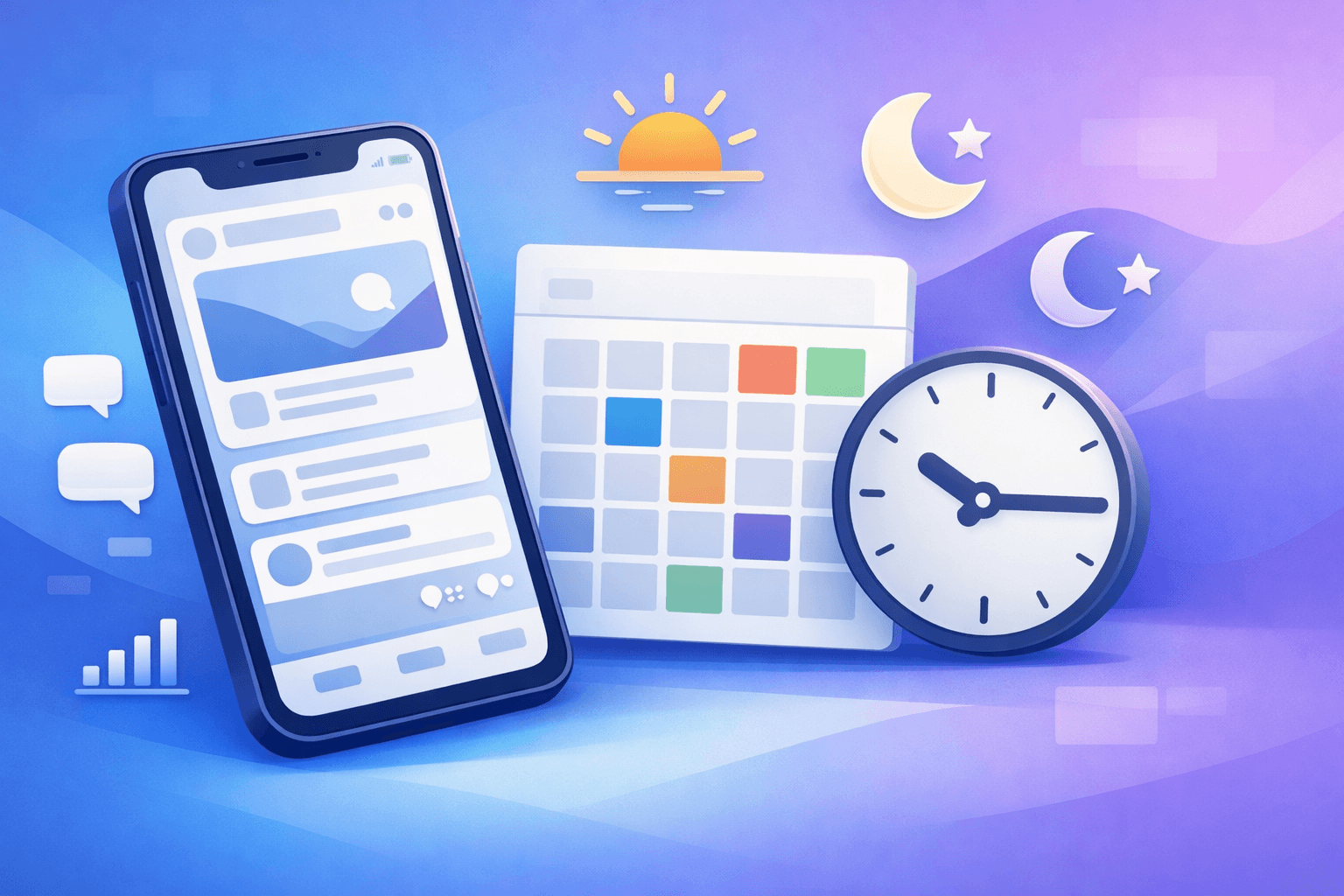
Facebook post timing plays an important role in how many people your post reaches and how many reactions it receives. Even a well-written post can get lost in the feed if it is published when most of your followers are not active. Many businesses post regularly but still do not receive enough reactions or comments. This is often because the content is not published at the right time. Proper timing can help your posts reach more people and generate higher engagement. If you want to better understand how an effective post is structured, it is worth reading the Facebook post creation guide. Internal link → Facebook post creation
Facebook post timing
Facebook post timing plays an important role in how many people a post reaches and how many reactions it receives. Even a well-written post can easily get lost in the feed if it appears when most followers are not active. Many businesses post regularly but still do not receive enough reactions or comments. This is often because the content is not published at the right time. Proper timing can help posts reach more people and generate higher engagement.
If you want to better understand how an effective post is structured, it is worth reading the Facebook post creation guide.
When is it worth publishing a Facebook post?
According to many studies, Facebook usage is strongest during three periods. In the morning, when people are heading to work or school. Around lunchtime, when many people take a short break. And in the evening, when users spend more time on social media.
However, these times are only general guidelines. Actual results strongly depend on the target audience and the industry. For a business, the best time is when its own audience is the most active.
Why is there no perfect time that works for everyone?
The effectiveness of Facebook post timing is influenced by several factors. The lifestyle of the target audience, the type of business, and the nature of the content all affect when it is worth publishing.
Followers of a B2B business are often more active during working hours. In contrast, an entertainment or lifestyle page tends to generate more reactions in the evening. That is why it is worth testing different times and observing how the audience responds.
Is it better to post on weekdays or weekends?
The performance of posts often also depends on whether they are published on weekdays or weekends. Based on the experience of many businesses, weekdays can provide more stable reach because users use Facebook regularly.
At the same time, for certain topics, weekend content can also perform well. If the audience is looking for leisure or inspirational content, weekend posts can also receive many reactions.
How to find your ideal posting time?
The best method is to monitor data. Facebook page statistics show when your followers are most active.
If you regularly publish at different times, a pattern will emerge over time. It becomes visible during which parts of the day more reactions or comments are received.
The type of post also matters. A question-based post, for example, often generates more comments, while an educational post may result in more shares.
If you are looking for inspiration for different content types, it is worth checking out the Facebook post ideas article.
How does timing affect engagement?
Engagement is one of the most important metrics on Facebook. Reactions, comments, and shares signal to the algorithm that the content is interesting to the audience.
If a post appears when most followers are active, the first interactions arrive faster. This increases the chance that the post will appear in more users’ feeds.
That is why proper timing can significantly influence not only reach but also engagement.
Why is it important to analyze Facebook post performance?
Optimizing Facebook post timing only truly works if you regularly analyze post performance.
Reach, reactions, and the number of comments help you understand which content performs best. If you publish multiple posts at different times, over time it becomes clear when your audience reacts most actively.
Based on the data, future content can be planned much more consciously.